Anti-Racism Workshops in Ballarat: Learning With, Not Just Delivering To
Shankar
—Mar 05, 2025
Intent
Anti-racism training is often framed as something delivered to staff. Our work in Ballarat deliberately resisted that framing. The intent was to create a shared learning space — one that recognised council staff as practitioners navigating real constraints, histories and community tensions, rather than passive recipients of information.
Working alongside the remarkable Maria Dimopoulos, now CEO of the Settlement Council of Australia , reinforced a central belief: when anti-racism work is done well, everyone in the room is both teacher and learner.
Activities
The workshops brought together council staff from across roles and functions to explore how racism operates structurally, culturally and interpersonally — including within institutions that are well-intentioned and values-driven.
Rather than relying solely on abstract concepts, we grounded discussions in everyday council practice: service delivery, enforcement, engagement, decision-making and internal culture. Staff were invited to reflect on moments of discomfort, uncertainty or silence — and to name the pressures they face when trying to “do the right thing” in complex environments.
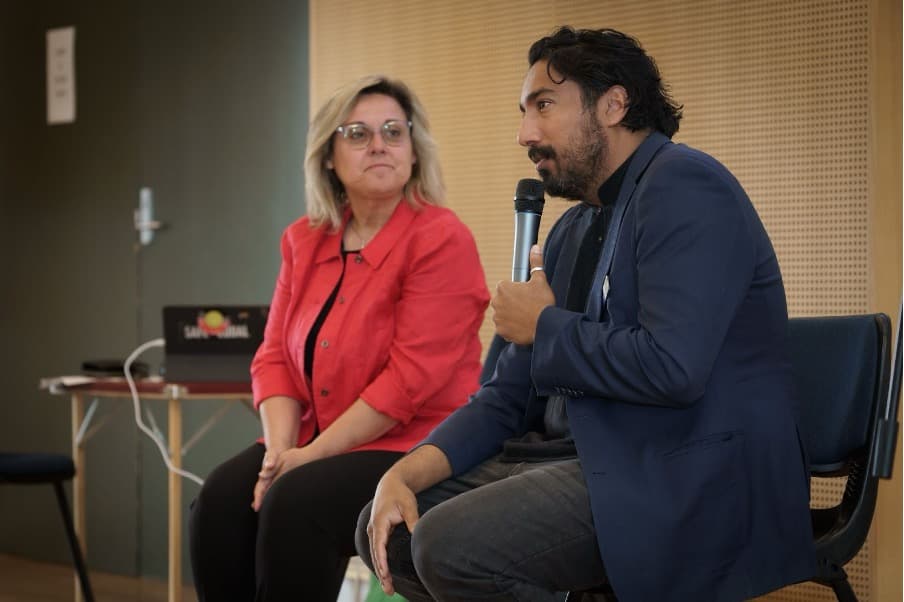
Co-facilitation was a critical part of the process. Delivering alongside Maria created a dynamic where multiple perspectives were visible and respected, modelling the kind of shared authority that anti-racism work demands.
Learnings
One of the most important learnings was how much council staff already know — and how rarely that knowledge is acknowledged. Many participants spoke about carrying concerns quietly, unsure how to raise issues of race without being seen as difficult, political or naïve.
We also learned — again — that training is never one-directional. The questions staff asked, the examples they shared, and the tensions they named shaped the learning in real time. Anti-racism is not a static body of knowledge; it is a practice that must respond to context.
Perhaps most importantly, the work reaffirmed that anti-racism training must be honest about limits. Councils operate within legislation, resourcing constraints and political realities. Creating space to acknowledge those constraints — rather than pretending they don’t exist — builds trust and makes change more possible.